





Looking for the perfect game to break the ice at your child’s next playdate or birthday party? Who’s most likely to for kids questions have become one of the most popular party games that guarantee laughter, bonding, and unforgettable memories. This simple yet entertaining game helps children learn more about their friends while having an absolute blast.
Whether you’re a parent planning a sleepover, a teacher organizing a classroom activity, or simply looking for screen-free entertainment, this guide will provide you with everything you need to know about playing who’s most likely to for kids games.
What Is the Who’s Most Likely To Game?
The Who’s Most Likely to for Kids game is a question-based activity where players vote on which person in the group is most likely to do a specific action or have a particular trait. It’s incredibly simple: someone reads a question, and everyone points to the person they think fits the description best.
This game works wonderfully because it:
- Encourages social interaction and communication
- Builds friendship bonds through shared laughter
- Helps shy children feel included
- Requires zero equipment or preparation
- Can be played anywhere, anytime
Benefits of Playing Who’s Most Likely To with Children
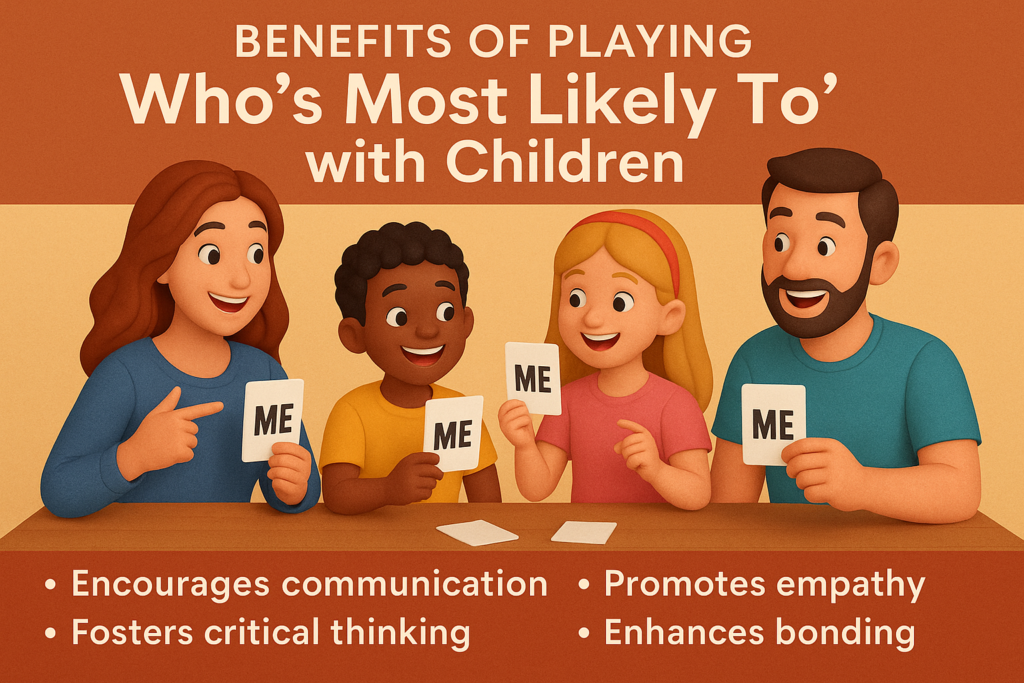
When kids participate in Who’s most likely to for kids, they develop several important social skills. The game creates a safe space for children to express their opinions while learning about their peers’ personalities.
Social and Emotional Development
Playing this game helps children practice empathy by thinking about their friends’ characteristics and behaviors. They learn to observe others, make connections, and understand different personality types. These skills translate into better communication and stronger friendships.
Building Confidence
When children are recognized for positive traits during the game, it boosts their self-esteem. Even funny or silly questions help kids feel seen and appreciated by their peer group.
How to Play Who’s Most Likely To for Kids
Setting up this game is remarkably easy, making it perfect for last-minute entertainment.
Basic Game Rules
- Gather all players in a circle or around a table
- Choose someone to read the first question
- After hearing the question, everyone simultaneously points to the person they think fits best.
- The person with the most votes explains why they got chosen (optional)
- Rotate to the next question, reader
Age-Appropriate Modifications
For younger children (ages 5-8), use simple, concrete questions about observable behaviors. For older kids (ages 9-12), you can introduce slightly more complex scenarios that require thinking about personality traits and future possibilities.
50+ Best Who’s Most Likely To Questions for Kids
Here’s a comprehensive list of who’s most likely to ask kids questions that are appropriate, fun, and engaging:
Funny and Silly Questions
- Who’s most likely to forget their homework?
- Who’s most likely to eat dessert before dinner?
- Who’s most likely to talk to animals?
- Who’s most likely to wear mismatched socks?
- Who’s most likely to laugh at their own jokes?
- Who’s most likely to make funny faces?
- Who’s most likely to trip over nothing?
- Who’s most likely to sing in the shower?
Positive Trait Questions
- Who’s most likely to help someone in need?
- Who’s most likely to share their toys?
- Who’s most likely to make everyone smile?
- Who’s most likely to become a teacher?
- Who’s most likely to win an award?
- Who’s most likely to be kind to everyone?
- Who’s most likely to become famous?
- Who’s most likely to invent something cool?
Adventure and Personality Questions
- Who’s most likely to travel the world?
- Who’s most likely to try new foods?
- Who’s most likely to climb the highest tree?
- Who’s most likely to stay up all night reading?
- Who’s most likely to become a superhero?
- Who’s most likely to have the most pets?
- Who’s most likely to learn a new language?
- Who’s most likely to go on a safari adventure?
Tips for Making the Game More Engaging
To maximize fun during your Who’s Most Likely to ” game session, consider these expert tips from child development specialists and experienced parents.
Create a Positive Environment
Always emphasize that this game is about celebrating everyone’s unique qualities. Establish a rule that all questions and answers should be kind and respectful. If a question makes anyone uncomfortable, simply skip it and move to the next one.
Mix Question Types
Alternate between funny questions and positive trait questions to maintain energy and ensure everyone gets highlighted for something wonderful. This balance keeps the game entertaining while building genuine connections.
Add Creative Twists
Consider these variations to keep things fresh:
- Voting Cards: Create simple cards with each player’s name that kids can hold up
- Score Keeping: Track who gets chosen most often (in a friendly way)
- Themed Rounds: Focus on specific topics like sports, school, or future dreams
- Drawing Game: Have kids draw their answers instead of pointing
When and Where to Play Who’s Most Likely To
This versatile game fits perfectly into numerous settings and occasions.
Perfect Occasions for the Game
- Birthday parties and celebrations
- Family game nights
- Classroom ice-breaker activities
- Camping trips and sleepovers
- Road trip entertainment
- Holiday gatherings
- Team-building activities for youth groups
- Rainy day indoor fun
The beauty of who’s most likely to ask kids questions is their adaptability. You can play with as few as three players or with larger groups of twenty or more children.
Creating Your Own Who’s Most Likely To Questions
Encourage older children to create their own questions based on inside jokes, shared experiences, or specific interests within their friend group. This personalization makes the game even more meaningful and memorable.
Question Creation Guidelines
When crafting custom questions, ensure they:
- Focus on positive or neutral traits
- Avoid sensitive topics or embarrassing situations
- Are age-appropriate and understandable
- Allow multiple people to be potential answers
- Encourage thinking rather than obvious choices
Common Mistakes to Avoid
While this game is generally foolproof, watch out for these potential pitfalls:
Parents and supervisors should intervene if questions become too personal, negative, or exclusionary. The goal is connection and fun, not competition or judgment. If one child consistently isn’t getting chosen, gently steer questions toward their strengths or switch to a different activity.
Printable Question Cards and Resources
Many websites offer free downloadable Who’s most likely to for kids question cards that you can print and cut out for easy gameplay. These pre-made resources save time and ensure you have age-appropriate content ready to go.
Consider creating a laminated set of question cards that can be reused for multiple parties and gatherings. Store them in a decorated box that kids can pull from randomly during the game.
For More: https://tordare.com/most-likely-to-questions-friends-deep/
Conclusion
The Who’s Most Likely to for Kids game offers endless entertainment while fostering meaningful connections between children. Its simplicity, flexibility, and universal appeal make it a must-have addition to any parent’s or educator’s activity toolkit.
Ready to bring laughter and bonding to your next gathering? Grab the question list above, gather the kids, and start playing! Whether you’re hosting a birthday party, organizing a classroom activity, or simply looking for quality family time, this game delivers guaranteed smiles and memories that last long after the final question.