





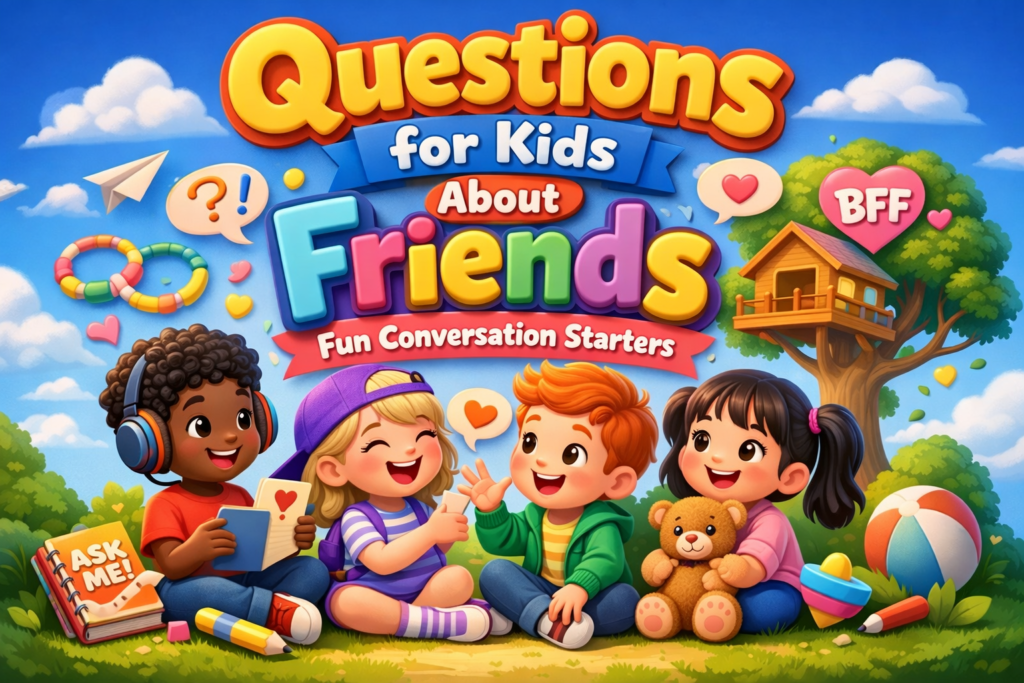
Building strong friendships is one of the most important aspects of childhood development. As parents and educators, we can help children explore their feelings, understand social dynamics, and develop empathy through meaningful conversations. Using questions for kids about friends is a powerful way to open dialogue, encourage reflection, and teach valuable life lessons about relationships.
Whether you’re looking to spark dinner table discussions, create classroom activities, or simply connect with your child on a deeper level, asking the right questions can transform ordinary moments into opportunities for growth. These conversation starters help children articulate their thoughts, process their emotions, and learn what it means to be a good friend.
Why Asking Questions About Friendship Matters
Children learn about relationships through experience and guidance. When we ask thoughtful questions for kids about friends, we’re giving them tools to navigate their social world with confidence and compassion.
Building Emotional Intelligence
Friendship questions encourage children to identify and express their feelings. When kids talk about what makes them happy in friendships or what hurts their feelings, they develop emotional awareness that serves them throughout life.
Developing Social Skills
Through conversation, children learn about boundaries, conflict resolution, and communication. Discussing friend scenarios helps them understand different perspectives and practice empathy before facing real-world situations.
Strengthening Family Bonds
These conversations create safe spaces where children feel heard and valued. When parents show genuine interest in their child’s friendships, it builds trust and opens channels for ongoing communication.
Questions for Kids About Friends
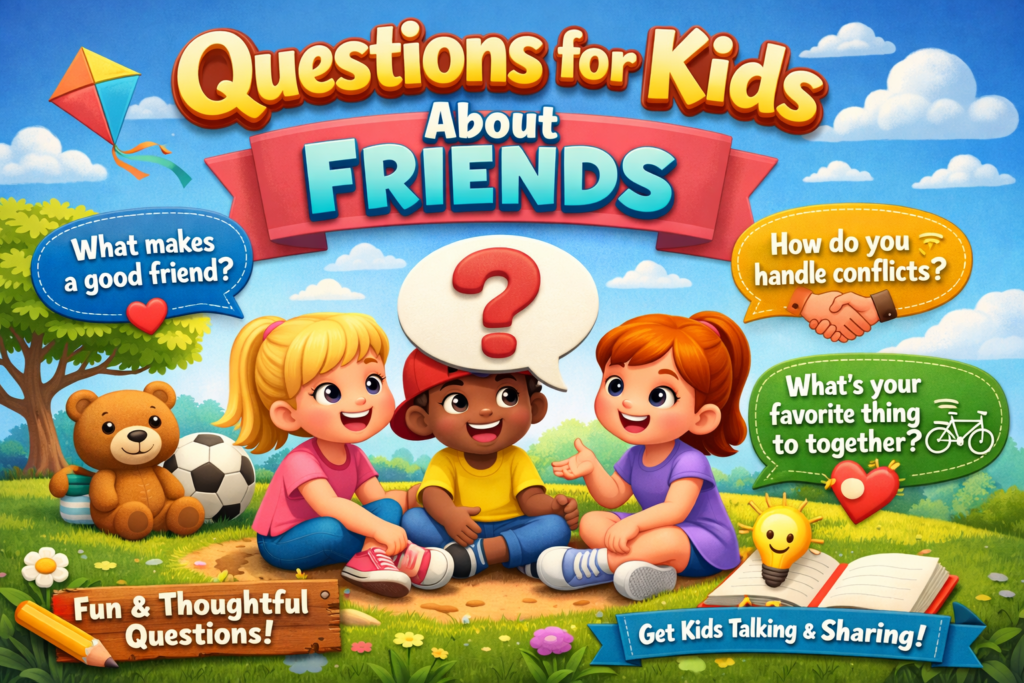
Here are engaging friendship questions organized by theme to help you connect with children meaningfully.
Getting to Know Their Friends
- Who is your best friend, and what makes them special to you?
- What activities do you enjoy doing together with your friends?
- How did you meet your closest friend?
- What makes someone a good friend in your opinion?
- Do your friends like the same things you do, or are they different?
Understanding Friendship Qualities
- What does it mean to be kind to a friend?
- Have you ever helped a friend when they were sad? How did it make you feel?
- What would you do if a friend were being left out?
- How do you show your friends that you care about them?
- What’s the nicest thing a friend has ever done for you?
Navigating Friendship Challenges
Conflicts are natural parts of growing up. These questions for kids about friends address difficult situations:
- Have you ever disagreed with a friend? How did you solve it?
- What would you do if a friend said something that hurt your feelings?
- Is it okay to have different opinions from your friends?
- How do you apologize when you’ve made a mistake?
- What does forgiveness mean to you?
Age-Appropriate Friendship Questions
For Younger Children (Ages 4-7)
Young children benefit from simple, concrete questions:
- What games do you play with your friends at school?
- Who makes you laugh the most?
- What’s your favorite thing to share with friends?
- How do you feel when you play with your friends?
For Older Children (Ages 8-12)
Preteens can handle more complex social concepts:
- How do you balance time between different friend groups?
- What qualities do you look for when making new friends?
- Have you ever felt peer pressure? How did you handle it?
- What does loyalty mean in friendship?
- How has your understanding of friendship changed as you’ve grown?
Creative Ways to Use Friendship Questions
Family Discussion Activities
Turn question time into engaging experiences. Try “Friendship Friday” dinner conversations where everyone shares stories about their friends. Create a question jar filled with questions for kids about friends and draw one each evening.
Classroom Integration
Teachers can incorporate these questions into morning meetings, journaling prompts, or social-emotional learning curricula. Role-playing scenarios based on student responses help children practice conflict resolution in safe environments.
Therapeutic Conversations
When children face friendship difficulties, structured questions provide frameworks for processing emotions. These conversations help identify patterns, build coping strategies, and develop resilience.
Teaching Friendship Values Through Questions
Inclusivity and Kindness
Ask questions that promote inclusive thinking:
- How can you make someone new feel welcome?
- What would you do if you saw someone sitting alone?
- How do you think it feels to be excluded?
Respect and Boundaries
Help children understand healthy relationship dynamics:
- Is it okay to say no to a friend sometimes?
- What does respecting someone’s feelings look like?
- How do you know if someone wants to be alone or wants company?
Digital Age Friendship Considerations
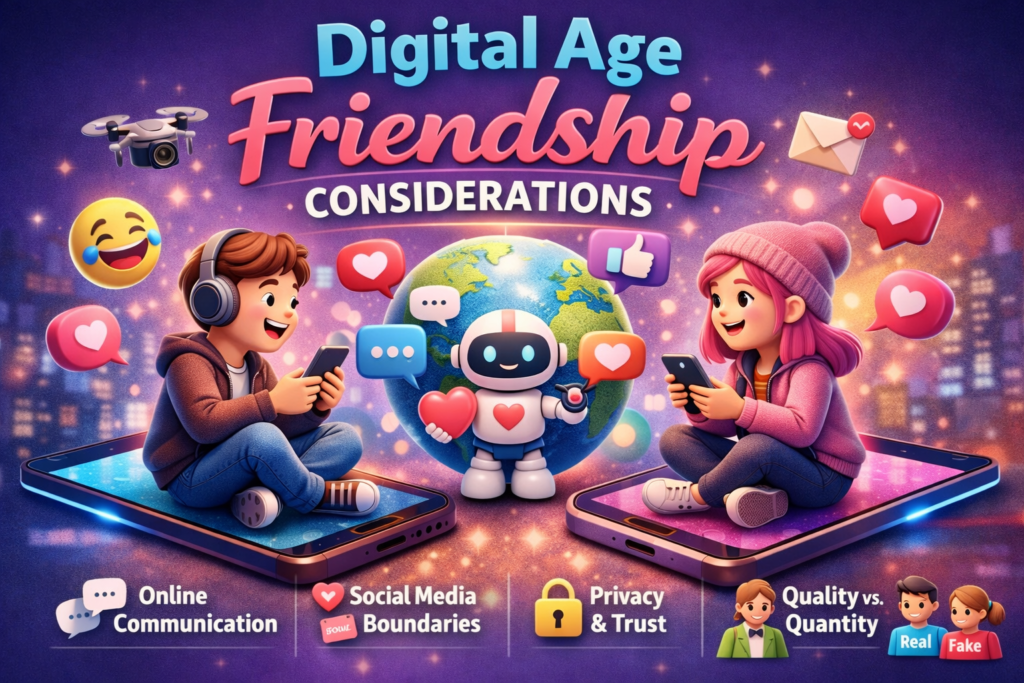
Modern childhood includes online interactions. Address these with relevant questions for kids about friends:
- How is having friends online different from friends you see in person?
- What should you do if someone is unkind in a group chat?
- How much time do you think friends should spend on devices versus playing together?
Benefits of Regular Friendship Conversations
Academic Performance
Children with strong social skills often perform better academically. They collaborate effectively, communicate clearly, and manage stress through peer support.
Mental Health
Regular discussions about friendships help identify social struggles early. Children who talk about their relationships develop better coping mechanisms and experience less anxiety.
Life Skills Development
Friendship questions teach negotiation, compromise, problem-solving, and emotional regulation—skills that translate into successful adult relationships and careers.
Red Flags to Listen For
While asking questions for kids about friends, pay attention to concerning responses:
- Consistent feelings of exclusion or loneliness
- Descriptions of manipulative or controlling behavior
- Fear of certain peers or situations
- Sudden changes in friendship patterns
These signals may indicate bullying or social struggles requiring additional support.
Creating a Question-Friendly Environment
Make these conversations natural, not interrogations. Show genuine curiosity, avoid judgment, and share your own friendship experiences. Let children know there are no wrong answers, their feelings and thoughts are valid and important.
For More: https://tordare.com/questions-for-kids-to-ask-parents/
Conclusion
Using thoughtful questions for kids about friends opens doors to meaningful conversations that shape how children understand relationships throughout their lives. These discussions teach empathy, communication, conflict resolution, and self-awareness while strengthening your connection with the children in your care.
Start incorporating these friendship questions into your daily routine today. Whether you’re a parent, teacher, or caregiver, you have the power to help children navigate their social worlds with confidence and kindness. What question will you ask first?