




Looking for entertaining ways to engage older adults? Trivia questions for seniors offer the perfect blend of nostalgia, mental stimulation, and social connection. Whether you’re organising activities at a retirement community, planning a family reunion, or simply spending quality time with elderly loved ones, trivia games create magical moments that bridge generations while keeping minds sharp.
Research shows that cognitive activities like answering trivia questions for seniors can help maintain mental agility and recall abilities. These quizzes tap into long-term memories from the 1940s through 1980s, allowing participants to share their experiences while enjoying friendly competition. Let’s explore how to create memorable trivia sessions that everyone will love.
Why Trivia Games Matter for Older Adults
Brain health becomes increasingly important as we age. Trivia questions and answers for seniors provide more than entertainment; they offer genuine cognitive benefits. When elderly participants recall historical events, classic movies, or popular songs from their youth, they’re exercising neural pathways that support memory function.
Social interaction during trivia sessions combats loneliness and isolation, which many seniors face. The group setting encourages laughter, storytelling, and camaraderie. Players often elaborate on their answers, sharing personal anecdotes that enrich everyone’s experience.
Additionally, trivia games boost confidence. Seniors possess decades of accumulated knowledge, and quiz competitions let them showcase their expertise. This sense of accomplishment improves mood and self-esteem.
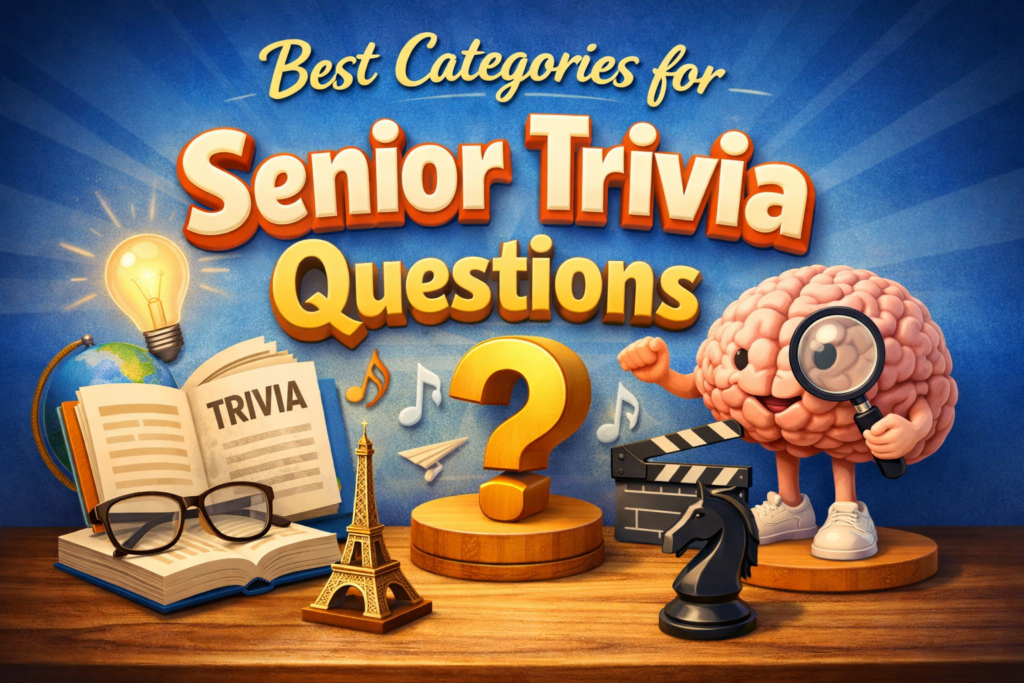
Best Categories for Senior Trivia Questions
Classic Entertainment and Pop Culture
Questions about golden-age Hollywood, beloved television shows, and iconic music resonate deeply with older audiences. Consider asking about stars like Frank Sinatra, Lucille Ball, or John Wayne. Television programs such as “I Love Lucy,” “The Ed Sullivan Show,” and “Gunsmoke” dominated living rooms during their prime years.
Music trivia spanning the Big Band era through Motown and classic rock generates enthusiasm. Ask about Elvis Presley’s hit songs, The Beatles’ album releases, or famous crooners who defined romantic ballads.
Historical Events and World Affairs
Seniors lived through remarkable historical moments. Trivia questions for seniors about World War II, the moon landing, presidential administrations, and cultural movements tap into their firsthand experiences. These topics often spark discussions about where participants were during significant events.
Questions might cover the D-Day invasion, the fall of the Berlin Wall, or the civil rights movement. Such queries validate their life experiences while educating younger quiz hosts about previous generations.
Sports Legends and Memorable Games
Athletic achievements from baseball’s golden age, boxing’s heavyweight champions, and Olympic triumphs make excellent trivia subjects. Names like Babe Ruth, Muhammad Ali, Joe DiMaggio, and Jesse Owens evoke powerful memories.
Consider questions about historic baseball World Series, famous golf tournaments, or legendary football coaches. Many seniors remember listening to games on the radio before television became commonplace.
Everyday Life and Consumer Products
Questions about vintage brands, old-fashioned household items, and bygone technologies bring smiles and nostalgia. Ask about rotary phones, typewriters, black-and-white television sets, or classic car models like the Ford Thunderbird.
Food and beverage brands that seniors remember from childhood create engaging discussions. Think about soda fountains, milk delivery services, and products that have since disappeared or drastically changed.
Sample Trivia Questions and Answers for Seniors
Question: What year did Neil Armstrong walk on the moon? Answer: 1969
Question: Which actress starred alongside Humphrey Bogart in “Casablanca”? Answer: Ingrid Bergman
Question: Who was the longest-serving First Lady of the United States? Answer: Eleanor Roosevelt
Question: What popular dance craze swept America in the 1920s? Answer: The Charleston
Question: Which baseball player was known as “The Yankee Clipper”? Answer: Joe DiMaggio
Question: What was the first feature-length animated Disney film? Answer: Snow White and the Seven Dwarfs (1937)
Question: Who sang “Unforgettable” and “Mona Lisa”? Answer: Nat King Cole
Question: What household appliance became common in American homes during the 1950s? Answer: The television set
Tips for Hosting Successful Senior Trivia Events
Start with easier warm-up questions to build confidence before increasing difficulty. Mix question types to maintain interest—combine multiple-choice, true-false, and open-ended formats. Allow participants to work in teams, which encourages collaboration and reduces pressure on individuals.
Provide adequate time for answers, as processing speed naturally slows with age. Read questions clearly and repeat them if requested. Consider using large-print materials for those with vision challenges.
Celebrate all participants, not just winners. Small prizes like candy, certificates, or applause create positive reinforcement. Most importantly, emphasise fun over competition. The goal is engagement and enjoyment, not creating stress.
Incorporate music into your trivia sessions by playing short clips from songs and asking participants to name the artist or title. Visual aids like photographs from different decades enhance recognition and trigger memories.
Adapting Questions for Different Ability Levels
Not all seniors have identical cognitive capabilities. Some may have early-stage memory concerns, while others remain sharp as ever. Prepare questions at varying difficulty levels so everyone can participate successfully.
For those with mild cognitive impairment, use questions with multiple-choice options rather than requiring recall alone. Recognition tasks prove easier than pure memory retrieval. Questions about visual items showing old photographs or product packages work particularly well.
For more advanced groups, create challenging questions that require deeper knowledge or inference. Literary trivia, complex historical connections, or questions about lesser-known facts engage those seeking intellectual stimulation.
Benefits Beyond the Game
The conversations sparked by trivia questions and answers for seniors often prove more valuable than the game itself. A question about 1960s music might lead someone to share their story about attending a Beatles concert. A World War II question could prompt a veteran to discuss their service.
These storytelling moments preserve family and community history. Encourage younger participants or staff members to listen actively and ask follow-up questions. Recording these sessions (with permission) creates priceless archives of personal histories.
Family members gain insights into their elders’ lives through trivia-triggered memories. Grandchildren learn about times before smartphones andthe nternet, developing an appreciation for previous generations’ experiences and resilience.
For More: https://tordare.com/trivia-questions-answers-for-teens/
Conclusion
Trivia questions for seniors transform ordinary gatherings into memorable celebrations of knowledge, experience, and connection. These games honour the rich lives older adults have lived while providing cognitive stimulation that supports ongoing mental health. Whether you’re a caregiver, activity director, or family member, implementing regular trivia sessions creates joy and meaning.
Ready to start your own trivia tradition? Gather your questions, assemble your group, and watch as faces light up with recognition and delight. The memories you create together will be just as valuable as the memories you help them recall. Start planning your next trivia questions for seniors event today and discover the powerful impact of honouring the past while celebrating the present.