





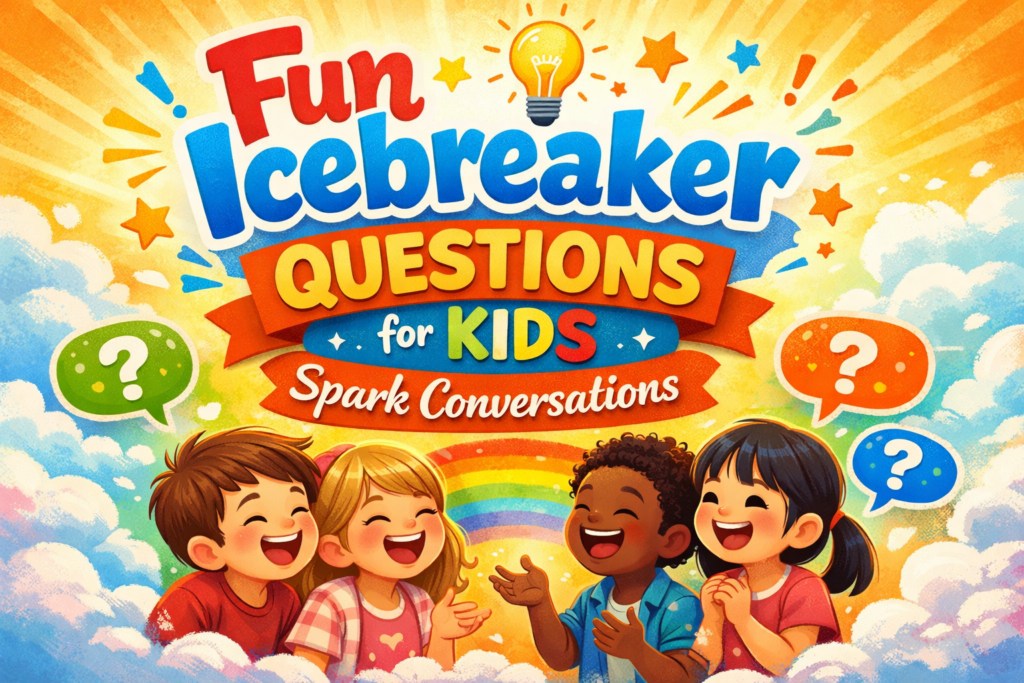
Getting children to open up and connect with peers can sometimes feel like solving a puzzle. Whether you’re a teacher preparing for the first day of school, a parent organizing a playdate, or a youth group leader, having the right icebreaker questions for kids makes all the difference. These conversation starters transform awkward silences into laughter-filled moments and help children build meaningful friendships. The beauty of icebreaker questions for kids lies in their simplicity. They’re designed to be fun, age-appropriate, and engaging enough to get even the shyest child talking. Within the first few minutes of using these questions, you’ll notice walls coming down and genuine connections forming.
Why Icebreaker Questions Matter for Children
Children naturally crave connection, but they don’t always have the tools to initiate conversations. Fun icebreaker questions for kids serve as bridges that connect young minds, helping them discover common interests and build social confidence. These questions create safe spaces where children can express themselves without judgment.
Research shows that children who engage in structured social activities develop stronger communication skills and emotional intelligence. When you introduce icebreaker questions for kids, you’re not just filling time; you’re teaching valuable life skills like active listening, empathy, and self-expression.
Best Icebreaker Questions for Different Age Groups
Elementary School Icebreakers (Ages 5-10)
Young children respond best to simple, imaginative questions that tap into their natural curiosity:
- If you could have any superpower, what would it be and why?
- What’s your favorite animal, and would you want it as a pet?
- If you could eat only one food for a week, what would you choose?
- What makes you laugh the hardest?
- If you could travel anywhere in the world, where would you go?
These icebreaker questions for kids work wonderfully because they’re open-ended and encourage creative thinking without putting pressure on children to give “correct” answers.
Middle School Conversation Starters (Ages 11-13)
Preteens appreciate questions that acknowledge their growing independence and interests:
- What’s a talent you have that might surprise people?
- If you could meet any historical figure, who would it be?
- What’s the best book or movie you’ve experienced lately?
- If you could design your dream bedroom, what would it look like?
- What’s something you’re really good at teaching others?
Creative Icebreaker Activities Using Questions
Would You Rather Games
Transform icebreaker questions for kids into interactive games. Would you rather questions force children to make choices and explain their reasoning, which naturally leads to deeper conversations. Examples include: “Would you rather fly or be invisible?” or “Would you rather live in the ocean or outer space?”
Two Truths and a Lie
This classic activity uses children’s icebreaker questions in a creative format. Each child shares three statements about themselves, two true and one false. Others guess which statement is the lie. This game encourages storytelling and active listening.
Question Ball
Write different icebreaker questions for kids on a beach ball with a permanent marker. Children toss the ball to each other, and whoever catches it answers the question closest to their right thumb. This adds a physical element that keeps energy levels high.
Tips for Using Icebreaker Questions Effectively
Create a Comfortable Environment
Before launching into icebreaker questions for kids, set the tone. Explain that there are no wrong answers and that everyone’s response is valuable. Model vulnerability by answering a question yourself first.
Read the Room
Pay attention to children’s energy levels and comfort. If a child seems reluctant to answer, offer them the option to pass or choose a different question. The goal of icebreaker questions for kids is to include everyone, not make anyone uncomfortable.
Follow Up With Genuine Interest
When a child answers an icebreaker question, show authentic curiosity. Ask follow-up questions like “What made you think of that?” or “Tell us more about that!” This demonstrates that their thoughts matter and encourages deeper sharing.
Seasonal and Themed Icebreaker Questions
Holiday-Themed Questions
Align your icebreaker questions for kids with seasons and holidays to keep them fresh and relevant:
- What’s your favorite holiday tradition?
- If you could invent a new holiday, what would we celebrate?
- What’s the best gift you’ve ever received or given?
Back-to-School Questions
Start the academic year strong with classroom icebreaker questions for kids:
- What’s one thing you hope to learn this year?
- If you could add any subject to school, what would it be?
- What’s your favorite thing about coming back to school?
Benefits of Regular Icebreaker Practice
Incorporating icebreaker questions for kids into regular routines yields remarkable benefits. Children develop stronger peer relationships, improve their public speaking abilities, and learn to appreciate diverse perspectives. Teachers who use these questions weekly report improved classroom dynamics and fewer social conflicts.
These conversation starters also help identify children who might be struggling socially. When you notice a child consistently giving short answers or seeming withdrawn, it signals an opportunity for additional support.
Common Mistakes to Avoid
While icebreaker questions for kids are powerful tools, certain approaches can backfire. Avoid questions that:
- Require expensive possessions or experiences (not all families have the same resources)
- Touch on sensitive family situations
- Create competition or comparison between children
- Are too complex or abstract for the age group
Instead, focus on fun icebreaker questions for kids that celebrate individuality and encourage imagination without excluding anyone.
For More:https://tordare.com/icebreaker-questions-for-teens/
Conclusion
Icebreaker questions for kids are more than simple conversation starters; they’re gateways to friendship, confidence, and community. By thoughtfully selecting age-appropriate questions and creating welcoming environments, you empower children to connect authentically with their peers. Whether you’re working with elementary students or middle schoolers, these questions break down barriers and build bridges between young hearts and minds.
Ready to transform your next gathering? Start using these icebreaker questions for kids today and watch as shy smiles turn into enthusiastic conversations. Download our free printable list of 50 conversation starters and make every interaction meaningful!