





Have you ever wondered which of your friends would actually clean up after a wild party? Playing most likely to clean questions during your next hangout is the perfect way to spark laughter, friendly debates, and hilarious confessions. This entertaining game reveals personality quirks and household habits you never knew existed. Whether you’re hosting a game night, looking for icebreakers, or simply want to call out your messiest friend, these questions create unforgettable moments that strengthen friendships while exposing everyone’s cleaning (or avoiding) tendencies.
What Are “Who’s Most Likely To” Questions for Friends?
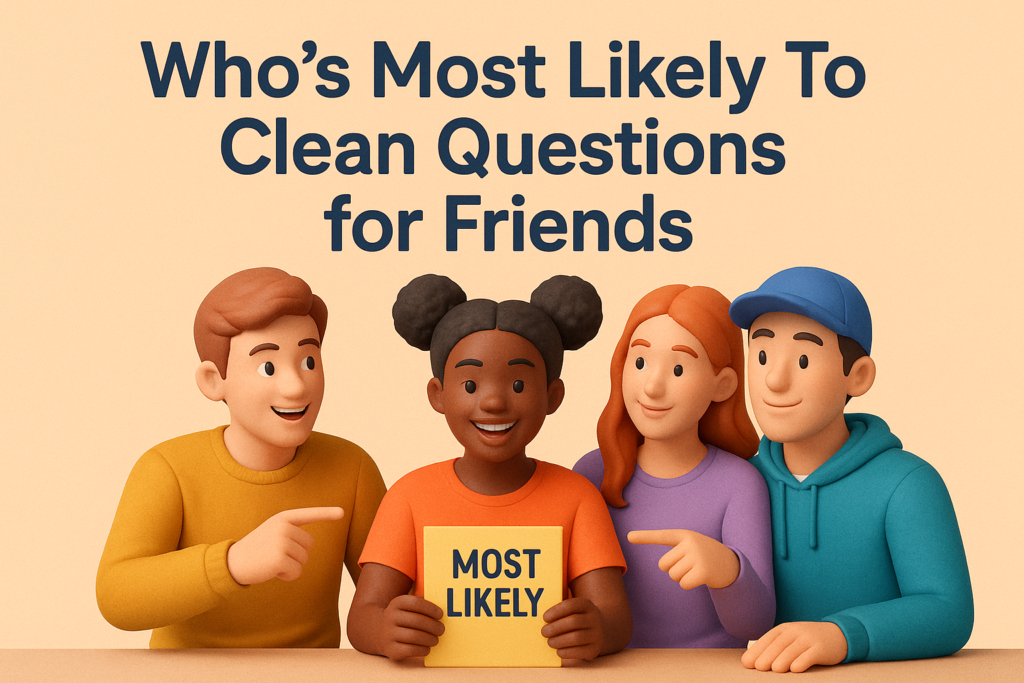
“Who’s Most Likely To” is a popular party game where players vote on which friend would most likely perform a specific action or behavior. When focused on cleaning themes, these questions become especially entertaining because everyone has different standards for tidiness. The game works simply: someone reads a question, everyone points to the person they think fits best, and the friend with the most votes “wins” that round.
Why Focus on Cleaning Questions?
Cleaning-related questions are universally relatable yet surprisingly revealing. They expose:
- Personality differences between neat freaks and organized chaos enthusiasts
- Living habits that friends might hide during casual visits
- Responsibility levels when it comes to shared spaces
- Procrastination patterns everyone can laugh about together
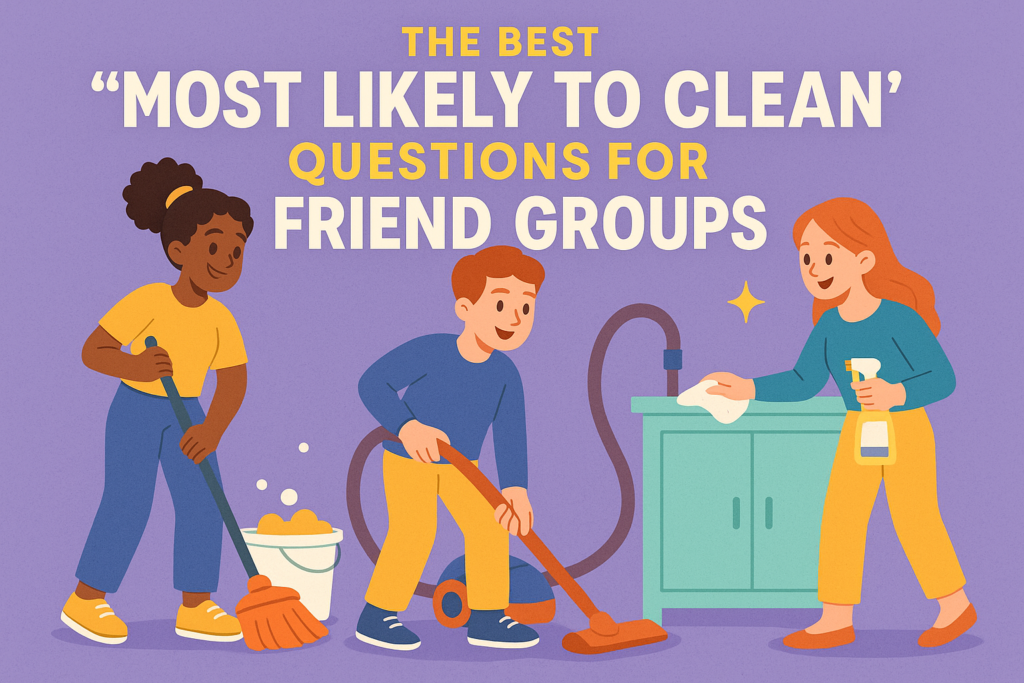
The Best “Most Likely To Clean” Questions for Friend Groups
Kitchen and Cooking Cleanup Questions
The kitchen reveals true character. Try these most likely to clean questions focused on cooking spaces:
- Who’s most likely to leave dirty dishes in the sink for days?
- Who’s most likely to clean the entire kitchen after cooking one meal?
- Who’s most likely to wipe down counters immediately after eating?
- Who’s most likely to let food expire in their refrigerator?
- Who’s most likely to organize their pantry by color and size?
Bathroom and Personal Space Questions
Bathrooms tell no lies about cleanliness standards:
- Who’s most likely to clean their bathroom once a month (if that)?
- Who’s most likely to scrub grout with a toothbrush?
- Who’s most likely to leave wet towels on the floor?
- Who’s most likely to have an organized medicine cabinet?
- Who’s most likely to clean the mirror after every use?
Living Room and Common Areas
Shared spaces create the most debate:
- Who’s most likely to vacuum daily?
- Who’s most likely to clean before guests arrive in a panic?
- Who’s most likely to dust their shelves weekly?
- Who’s most likely to leave clothes on the couch?
- Who’s most likely to rearrange furniture while cleaning?
Bedroom and Private Spaces
Personal spaces reveal intimate habits:
- Who’s most likely to make their bed every morning?
- Who’s most likely to have clothes piled on “the chair”?
- Who’s most likely to do laundry only when completely out of clean clothes?
- Who’s most likely to clean their room for motivation?
- Who’s most likely to organize their closet by season?
How to Play “Who’s Most Likely To Clean” Questions Effectively
Setting Up the Game
- Gather your friend group (works best with 4-10 people)
- Create a comfortable environment where everyone feels safe being honest
- Establish rules: simultaneous pointing, majority wins, or discussion-based
- Prepare questions in advance or use spontaneous prompts
Making It More Engaging
- Add consequences: The person with the most votes explains their cleaning philosophy
- Keep score: Track who gets chosen most frequently throughout the game
- Share stories: Let each “winner” defend themselves with hilarious anecdotes
- Take photos: Document the pointing moments for social media memories
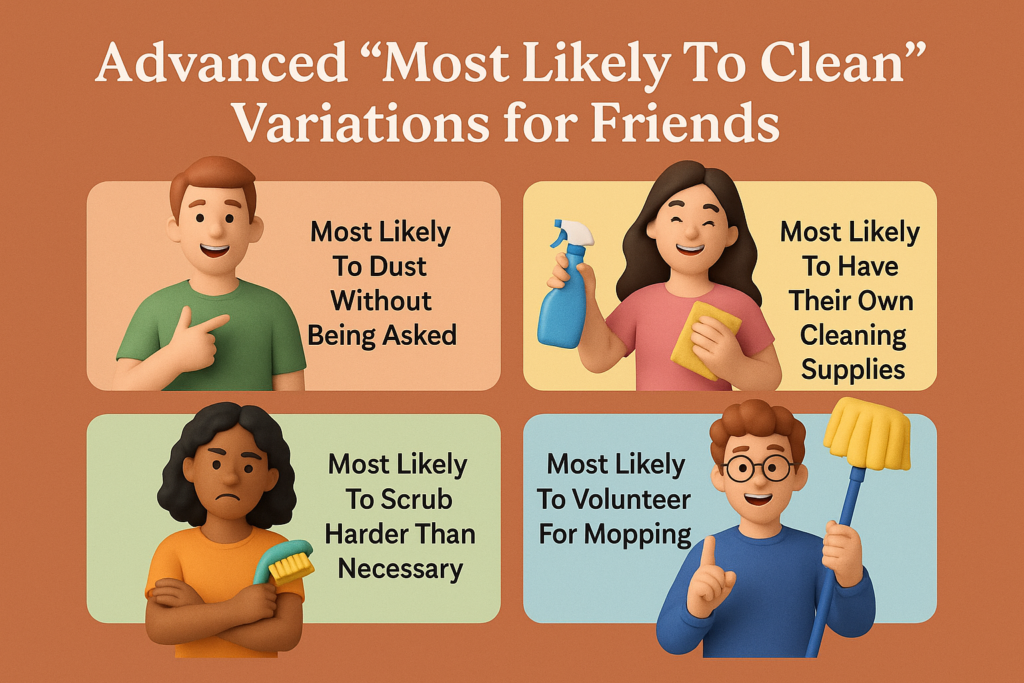
Advanced “Most Likely To Clean” Variations for Friends
Roommate Edition Questions
Perfect for people who share living spaces:
- Who’s most likely to passive-aggressively clean shared spaces?
- Who’s most likely to create a chore chart?
- Who’s most likely to ignore the cleaning schedule?
- Who’s most likely to clean common areas without being asked?
Party Aftermath Questions
Ideal for post-celebration gatherings:
- Who’s most likely to stay up cleaning after everyone leaves?
- Who’s most likely to leave a party mess until morning?
- Who’s most likely to organize the recycling properly?
- Who’s most likely to pretend the mess isn’t there?
Extreme Cleaner vs. Messy Questions
For dramatic comparisons:
- Who’s most likely to hire a professional cleaner?
- Who’s most likely to clean when stressed or anxious?
- Who’s most likely to have lived in actual filth at some point?
- Who’s most likely to judge others’ cleaning standards?
The Psychology Behind Cleaning Habits Among Friends
Understanding most likely to clean questions reveals deeper personality insights:
The Organized Achiever
Friends who consistently win “most likely to clean immediately” categories often display:
- High conscientiousness levels
- Stress relief through organization
- Control preferences in their environment
- Productivity-focused mindsets
The Comfortable Chaos Creator

Those voted “most likely to ignore mess” typically show:
- Creative thinking patterns
- Flexible priority systems
- Relaxed attitudes toward perfection
- Different cleanliness thresholds
The Situational Cleaner
Friends who clean only under specific circumstances demonstrate:
- Adaptive behavior patterns
- Social awareness (cleaning before guests)
- Procrastination followed by intense productivity
- External motivation requirements
Why These Questions Strengthen Friendships
Playing is most likely to clean questions, builds connections through:
- Shared vulnerability: Everyone admits their flaws in a judgment-free zone
- Mutual understanding: Friends learn about different household standards
- Inside jokes: Create recurring references about cleaning personalities
- Acceptance: Normalize different approaches to tidiness and organization
Tips for Creating Your Own Cleaning Questions
Want to personalize your game? Follow these guidelines:
- Keep it lighthearted: Avoid genuinely offensive or hurtful topics
- Stay relatable: Base questions on common experiences everyone understands
- Mix extremes: Include both neat freak and messy scenarios
- Add specificity: Detailed questions create funnier mental images
- Consider your group: Tailor questions to your friends’ actual living situations
Example Custom Questions
- Who’s most likely to clean their car only at the car wash?
- Who’s most likely to use Febreze instead of actually cleaning?
- Who’s most likely to organize their books but ignore the dust?
For More: https://tordare.com/truth-or-dare-questions-for-boys/
Conclusion
Most likely to clean questions transform ordinary gatherings into memorable experiences filled with laughter and revelation. Whether your friends are obsessive organizers or comfortable mess-makers, these prompts create conversations that strengthen bonds and expose hilarious truths. The beauty lies not in judging cleanliness standards but in celebrating personality differences that make each friendship unique.