





Every parent and teacher knows that children are naturally curious. They want to explore, understand, and make sense of the world around them. One of the most effective ways to nurture this curiosity is through questions for kids in English that challenge their thinking while making learning enjoyable. Whether you’re looking to improve their language skills, encourage creativity, or simply spend quality time together, asking the right questions can make all the difference. These thought-provoking prompts help children develop vocabulary, critical thinking abilities, and confidence in expressing themselves.
Why Asking Questions Matters for Children’s Development
Children learn best through active engagement rather than passive listening. When you ask questions for kids in English, you’re not just filling silence you’re building neural pathways that strengthen cognitive development. Research shows that children who are regularly asked open-ended questions develop stronger communication skills and perform better academically.
Asking questions helps children:
- Expand their English vocabulary naturally
- Practice sentence formation and grammar
- Develop logical thinking and problem-solving skills
- Build confidence in expressing their opinions
- Strengthen memory and recall abilities
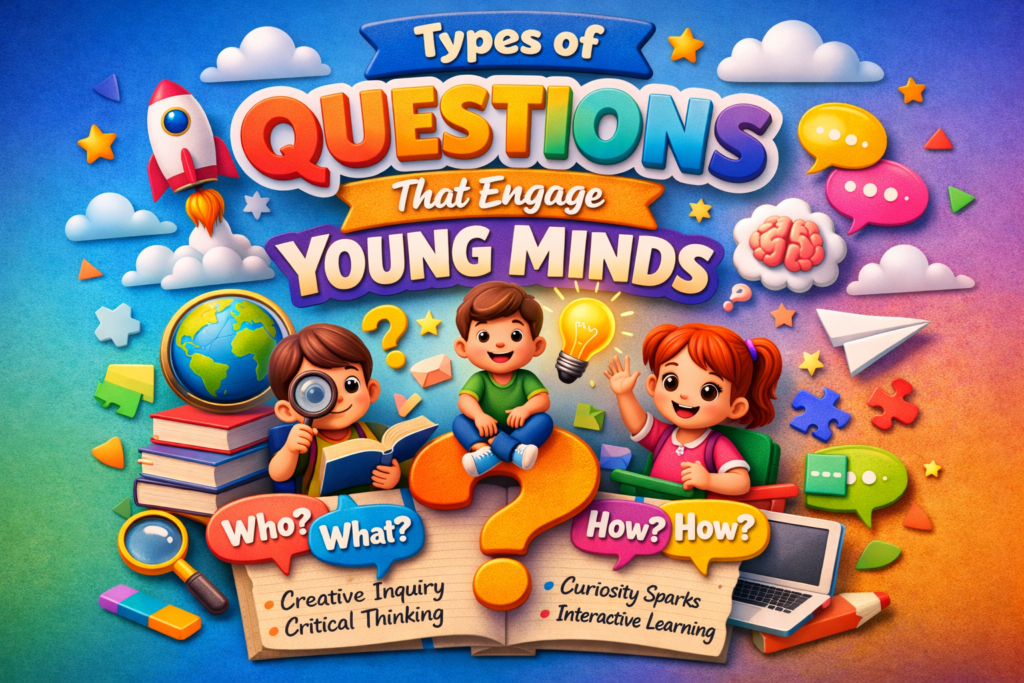
Types of Questions That Engage Young Minds
Personal Development Questions
These questions for kids in English help children reflect on their feelings, experiences, and personal growth:
- What made you smile today?
- If you could have any superpower, what would it be and why?
- What is something new you learned this week?
- Who is your hero and what makes them special?
- What are three things you’re grateful for?
Personal questions teach emotional intelligence and self-awareness while naturally incorporating English language practice into daily conversations.
Creative and Imaginative Questions
Imagination-based questions for kids in English unlock creativity and encourage storytelling:
- If animals could talk, which one would be the funniest?
- What would you do if you found a magic door in your house?
- If you could invent something to help people, what would it be?
- What would your dream treehouse look like?
- If you could visit any planet, where would you go?
These questions stimulate creative thinking while allowing children to practice descriptive language and complex sentence structures.
Educational Questions for Different Age Groups
Questions for Younger Children (Ages 4-7)
Simple English questions for kids in this age group should focus on basic concepts:
- What colors do you see around you?
- Can you name five animals that live in water?
- What sounds do different animals make?
- How many fingers and toes do you have?
- What is your favorite season and why?
Questions for Older Children (Ages 8-12)
More complex questions for kids in English challenge older children intellectually:
- How do you think airplanes stay in the sky?
- What would happen if there were no rules?
- Why do you think some countries speak different languages?
- If you could solve one world problem, what would it be?
- How do you think technology will change in the future?
Fun Conversation Starters for English Practice
“Would You Rather” Questions
These entertaining questions for kids in English create engaging dialogues:
- Would you rather be able to fly or be invisible?
- Would you rather live in the mountains or by the ocean?
- Would you rather have a pet dragon or a pet unicorn?
- Would you rather time travel to the past or future?
- Would you rather be the fastest runner or the smartest student?
Silly and Funny Questions
Humor makes learning memorable. Try these amusing questions for kids in English:
- If you were a vegetable, which one would you be?
- What would happen if cats could drive cars?
- If your toys came alive at night, what would they do?
- What’s the silliest word you know?
- If you could only eat one food forever, what would it be?
Science and Nature Questions to Spark Curiosity
Encourage scientific thinking with these exploratory questions for kids in English:
- Why does the moon change shape?
- How do plants grow from tiny seeds?
- What makes rainbows appear in the sky?
- Why do we need to sleep?
- How do butterflies transform from caterpillars?
These questions naturally lead to research opportunities and deeper learning experiences while reinforcing English vocabulary related to science and nature.
Social and Ethical Questions for Character Building
Develop moral reasoning through thoughtful questions for kids in English:
- What does it mean to be a good friend?
- How can you help someone who is sad?
- Why is it important to tell the truth?
- What would you do if you saw someone being bullied?
- How can we take care of our planet?
Tips for Asking Effective Questions
When using questions for kids in English, remember these best practices:
Listen actively to their answers without interrupting. Children need to know their thoughts matter.
Avoid yes/no questions whenever possible. Open-ended questions encourage longer, more detailed responses.
Be patient with their thinking process. Some children need extra time to formulate their thoughts in English.
Follow up with additional questions based on their answers to create meaningful conversations.
Make it fun rather than feeling like a test. The goal is engagement, not perfection.
For More: https://tordare.com/questions-for-kids-worksheet/
Conclusion
Incorporating questions for kids in English into your daily routine creates powerful learning opportunities that extend far beyond language development. Whether you’re a parent, teacher, or caregiver, these conversation starters help children build confidence, expand their vocabulary, and develop critical thinking skills that will serve them throughout their lives.
Start today by choosing just five questions for kids in English from this guide and make them part of your evening routine or classroom activities. You’ll be amazed at how these simple conversations can transform learning into an adventure that children look forward to every day. The questions you ask today will shape the thinkers, leaders, and communicators of tomorrow.